
The fifth meeting of the Deliberative Democracy Policy Lab in Kyiv
.png&w=828&q=75)
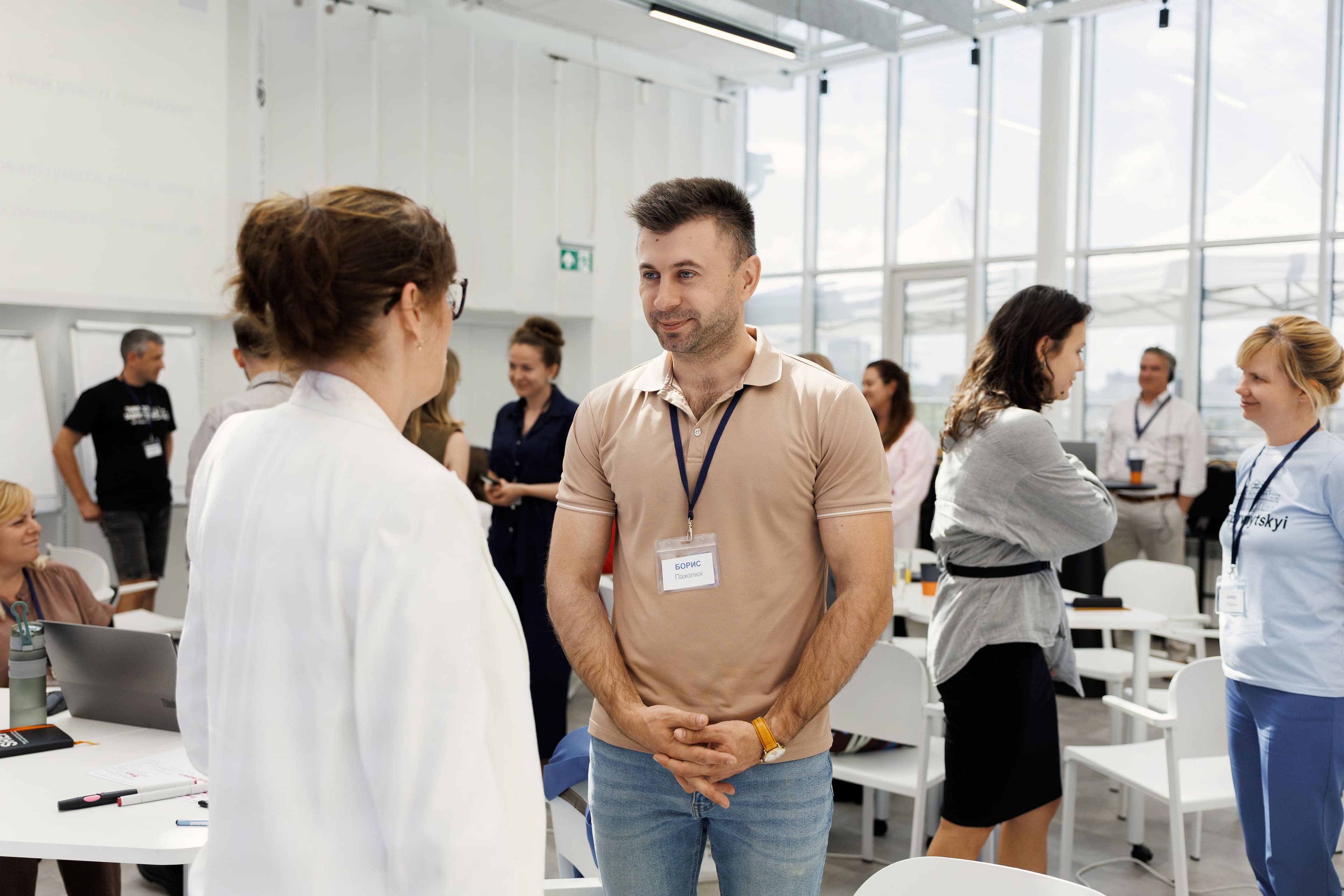
On 29 and 30 July 2026, Kyiv hosted the fifth and final meeting of the Deliberative Democracy Policy Lab within the BRIDGE project.
Participants from different cities across Ukraine gathered at the KSE Dragon Capital Building to complete the work they had begun in February 2026: developing shared recommendations for the implementation of deliberative democracy standards in Ukraine. They also sought to answer the question: how can deliberative practices become a common tool that citizens and public authorities turn to when making complex decisions together?

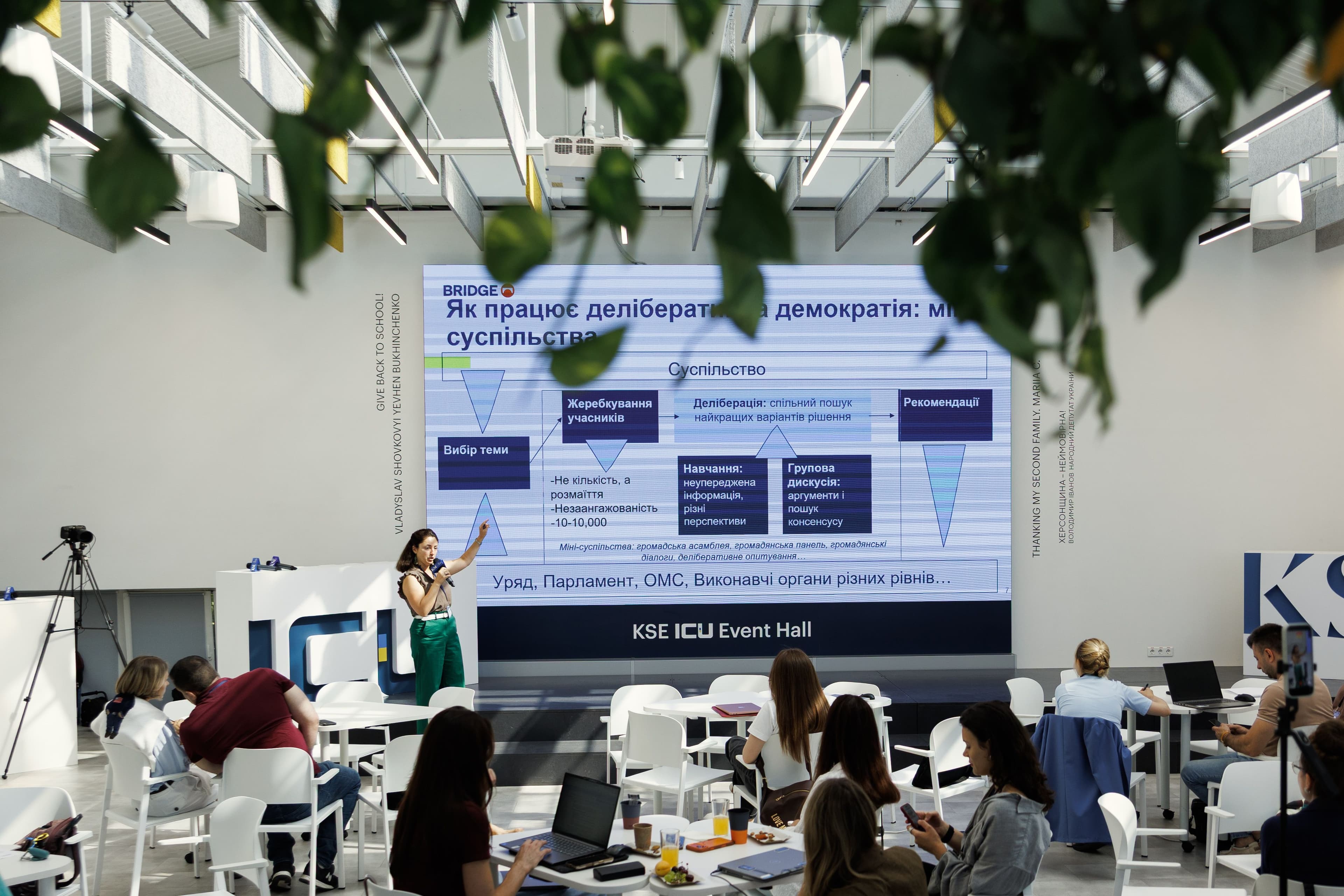
The work of the Policy Lab was moderated by Illia Tkachenko, Research Coordinator at the BRIDGE project and the Center for Democratic Resilience at KSE, and Tetiana Terletska, Operations Director at the NGO Center for Community Development and Cooperation and Advisor to the Center for Democratic Resilience at KSE.
Deliberative Democracy refers to practices that involve ordinary citizens in developing decisions, based on random selection of participants (selection by lot) and deliberation. In Ukrainian, the term “дорадча демократія” is sometimes used to refer to deliberative democracy, but it covers a broader range of public participation practices.
The meeting was opened, as usual, by Oleksandra Keudel, Scientific Lead of the BRIDGE project, Associate Professor and Director of the Center for Democratic Resilience at the Faculty of Social Sciences, Kyiv School of Economics, and Kerstin Lücker, Head of the Technology and Participation Division at the Department of Labor, Technology, and Participation, Technical University of Berlin. They summarised the previous meetings of the Policy Lab and outlined the shared goal for the two days of work.
.jpg&w=3840&q=75)

On the first day, Illia Tkachenko gave an overview of approaches to the institutionalisation of deliberative tools in different countries, while invited speaker Lex Paulson, Co-founder, Executive Director, and Professor at the School of Collective Intelligence at Mohammed VI Polytechnic University (UM6P), and Professor at the Institute of Political Studies at Sciences Po (France), spoke about how durable social movements emerge and how approaches to governance change, whether at the local or the national level. Maksym Latsyba, Head of the Civil Society Development Programme at the Ukrainian Independent Center for Political Research, in turn helped to draw parallels with Ukraine's existing experience of institutionalising new public participation tools.
The participants continued to examine experience already gained in Ukraine. Daryna Sokolova, Project Manager of the Council of Europe’s “Strengthening Multilevel Governance and Local Democracy to Support Ukraine’s Recovery” project, spoke about how her team organised citizens’ assemblies in 2026.

On the second day, Viktor Nestulia, Head of the DREAM Project Office, showed how the views of residents can be taken into account at every stage of public investment — when a community plans, selects, and evaluates projects, rather than simply approving a decision that has already been made.
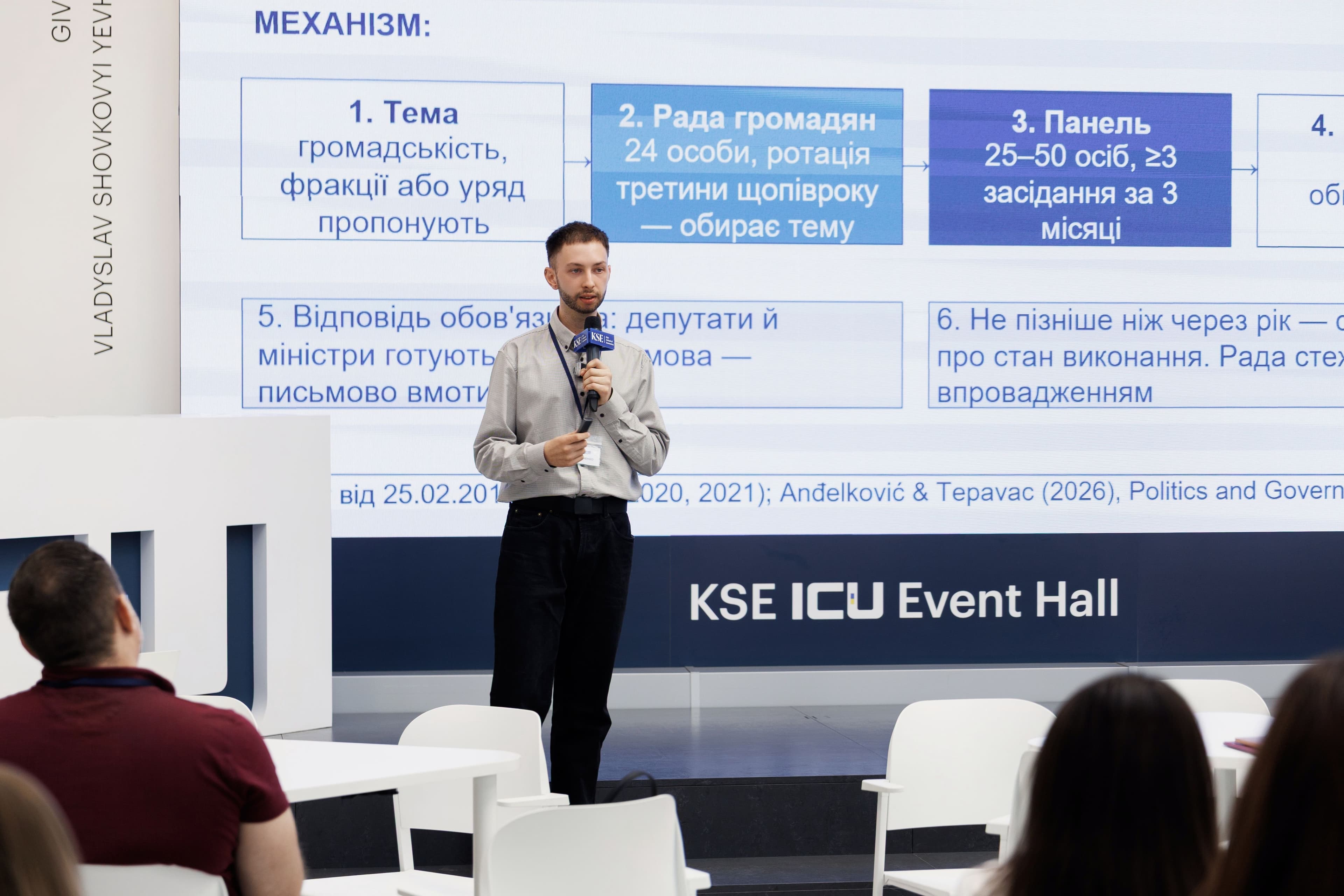


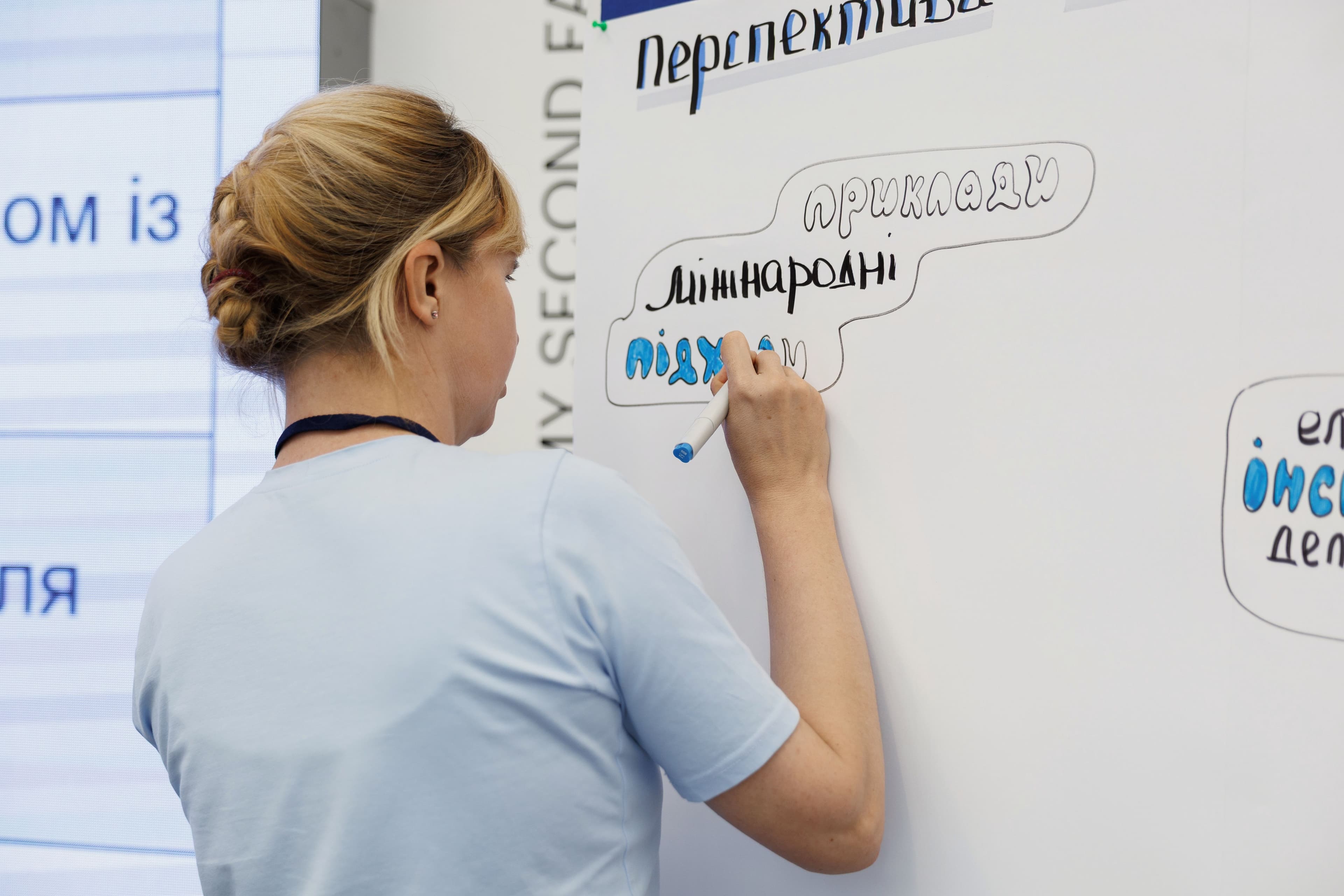
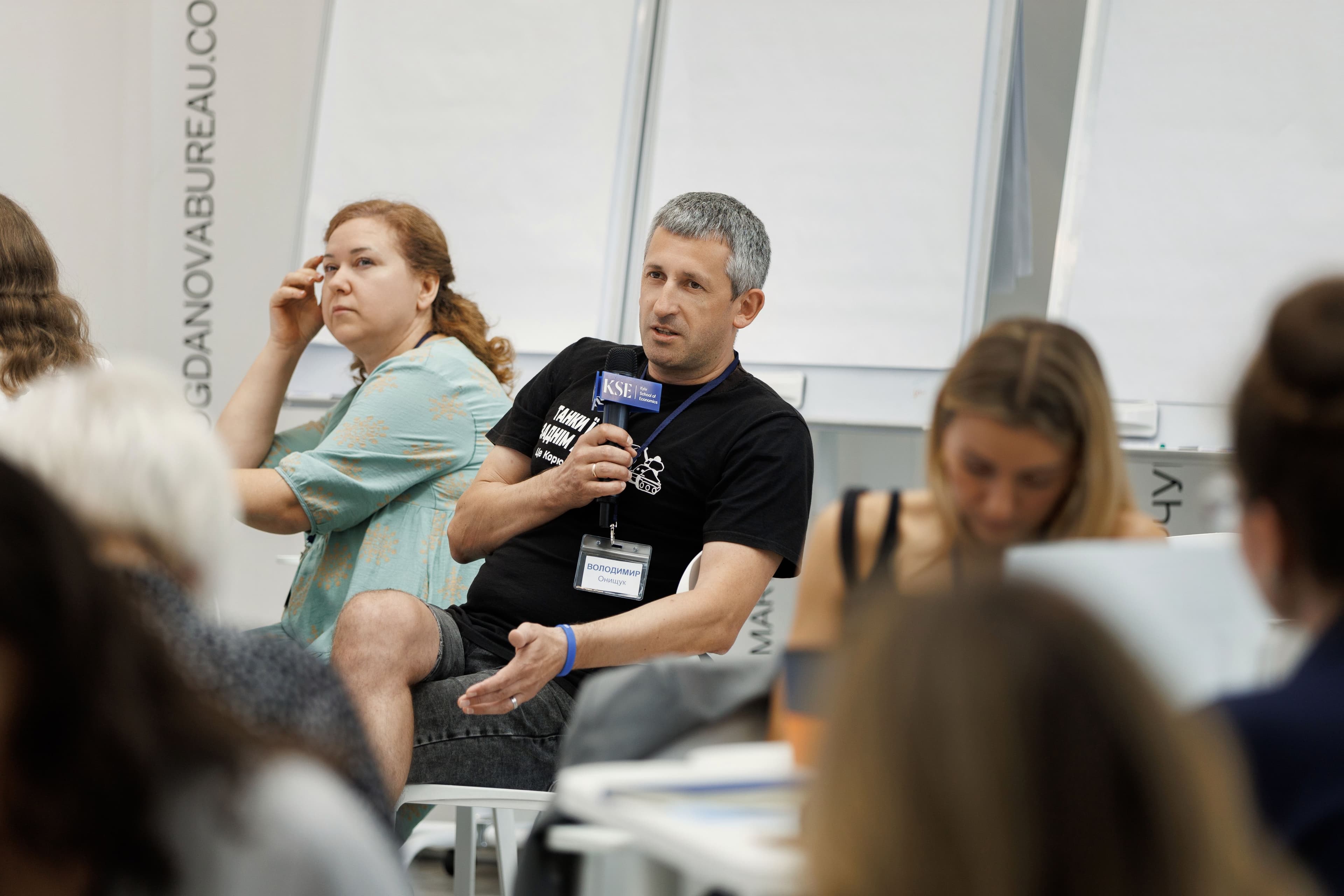
At the end of the meeting, the working groups refined the sections and agreed on a preliminary draft of the recommendations. The final document will cover the entire deliberative process: choosing the topic and format, selecting participants through random selection, planning the deliberation and ensuring its quality, building trust, combining different participation tools, digital deliberation, and institutionalisation. These recommendations will serve as a practical guide for communities, public authorities, and research teams seeking to use deliberative democracy tools effectively.




The fifth session marked the end of the series of Deliberative Democracy Policy Lab meetings, but not the collaboration among its participants. They agreed to establish an open informal network of deliberative democracy practitioners in Ukraine. Participation in the network will remain voluntary, with its members determining how it operates.
In August 2027, the community will meet again to share their work and jointly identify the next steps.
The Deliberative Democracy Lab is a platform for exchanging ideas and experiences with the aim to identify effective adaptations of international deliberative practices to the Ukrainian context. The Lab’s ultimate goal is to develop recommendations for the effective integration of deliberative democracy into Ukraine’s public participation system.
Read about the previous meetings of the Deliberative Democracy Policy Lab: Meeting 1, Meeting 2, Meeting 3, Meeting 4.