
Volodymyr Ksienich presented a joint study with Dmytro Khutkyy on the recovery of Ukrainian smart cities at the “Gender, Technology & Power” conference
A graduate of the University of Tartu, Volodymyr Ksienich presented a joint study with BRIDGE project researcher from the University of Tartu, Dmytro Khutkyy, titled “Ukrainian smart cities in wartime: Predicting the success of local restoration projects on the DREAM platform”.
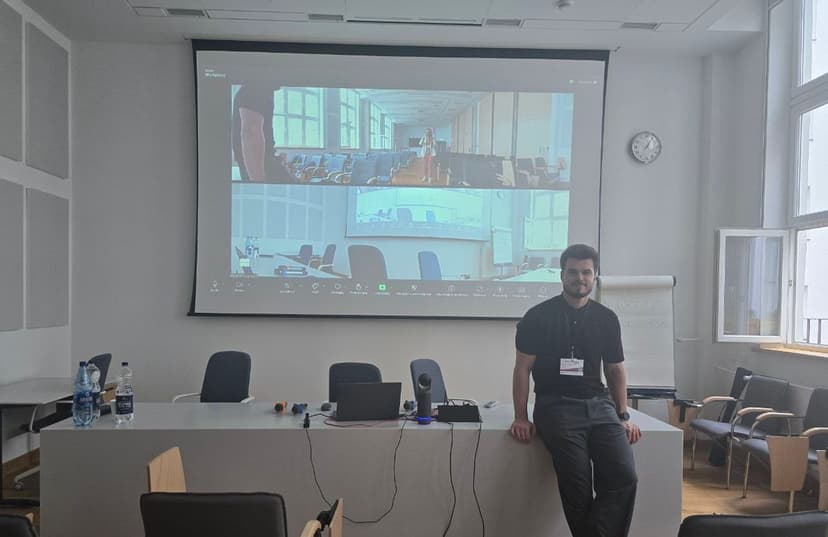
On 2–4 September 2025, the international conference “Gender, Technology & Power” took place in Warsaw. There, University of Tartu graduate Volodymyr Ksienich presented the joint research with BRIDGE project scholar Dmytro Khutkyy: “Ukrainian smart cities in wartime: Predicting the success of local restoration projects on the DREAM platform”.
The study focused on why some restoration projects carried out during wartime are completed, while others experience delays, despite having equal access to state funding and operating within a unified legal framework.
To answer this, the researchers combined five open datasets: the DREAM project registry, the DREAM completeness audit, “Transparent Cities” assessments, the Digital Index indicators, and the IRI survey. This allowed the creation of a panel of 190 thoroughly documented wartime restoration projects.
Using logistic regression and ensemble algorithms, the team tested a six-component theoretical model. The results proved highly illustrative and offered direct recommendations for improving restoration effectiveness.
- Procurement strategy. Splitting procurement into additional micro-lots increases the likelihood of successful project completion by roughly 9.8 times.
- Financial transparency. Publishing real-time financial schedules boosts the probability of success by 12 percentage points, regardless of budget size.
- Digital maturity. Increasing a region’s digital maturity by one standard deviation adds 5 percentage points to project success — but only if this maturity is accompanied by basic openness of e-services.
The findings refine the theory of “transparency backlash” and propose a concrete, integrated policy package — from mandatory micro-lotting to targeted investments in e-governance.
Despite the relatively small number of conference participants, the level of engagement and the sharpness of questions, especially from representatives of the University of Warsaw, underscored the value of the presented work. The feedback encouraged the researchers to revisit certain methodological decisions and to reflect more deeply on the broader implications of the results. The presentation confirmed the study's relevance and strengthened plans for further development of this research direction.
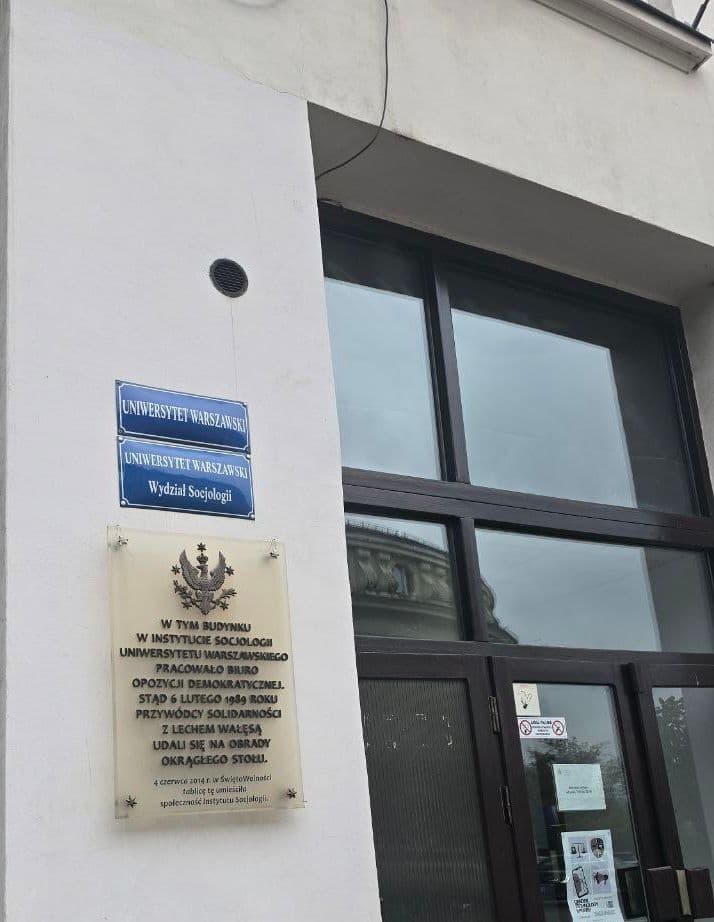
Thank you to the University of Warsaw for the invitation! We are glad to share BRIDGE’s experience at international events.