
Oleksandra Keudel and Illia Tkachenko at Lead Facilitator Training in Copenhagen
Oleksandra Keudel and Illia Tkachenko completed a three-day intensive training for facilitators of deliberative processes

On 14–16 September, Oleksandra Keudel, BRIDGE Project Lead and Director of the Centre for Democratic Resilience at KSE, and Illia Tkachenko, Research Coordinator at BRIDGE, took part in training on facilitating deliberative processes in Copenhagen.
The three-day intensive training for lead facilitators of citizens' assemblies and other deliberative processes, organised by FIDE Europe and We Do Democracy, brought together 17 participants from different countries.
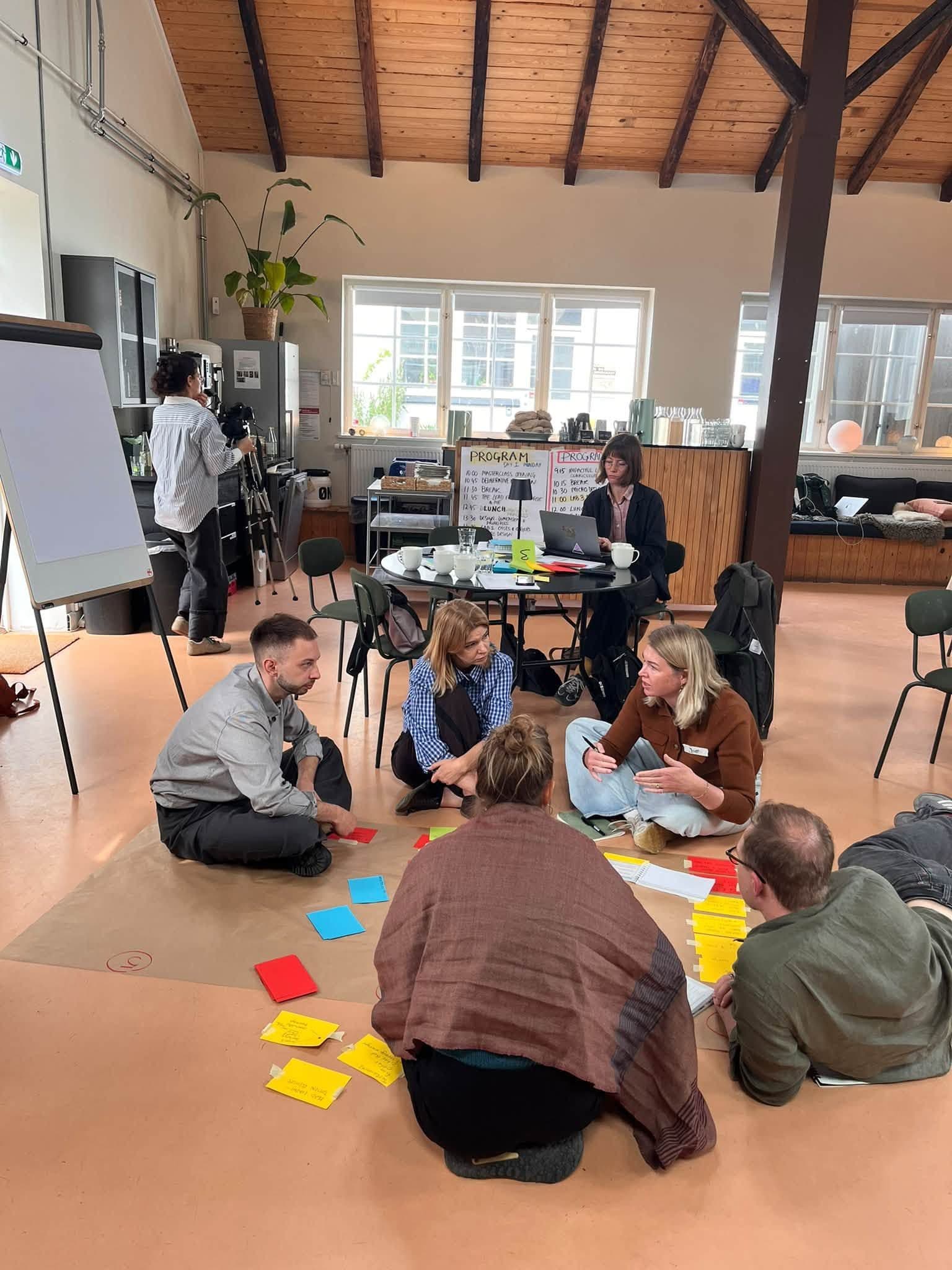
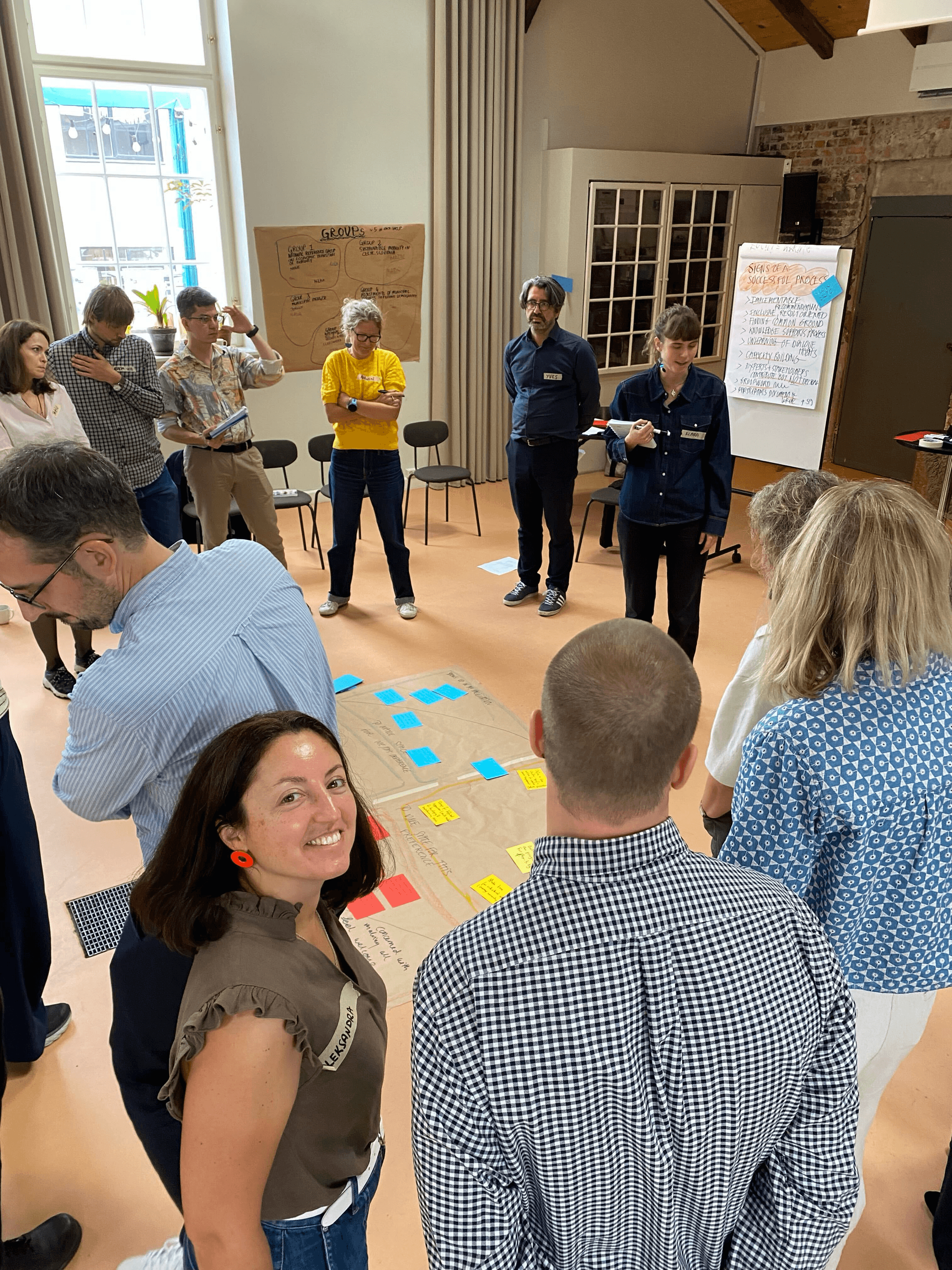
According to Oleksandra and Illia, the training exceeded their expectations. Among the topics they highlighted were:
- How to develop a process from the assembly's mandate (the framework for its work and the authorities' commitments regarding its recommendations) to an outcome in a way that ensures the recommendations are accepted not only by representatives of the authorities, but also by those affected by the decisions, even though they did not take part in the discussions.
- How to work with conflicts and situations of sabotage, overcome deadlocks when a group cannot reach agreement, and organise a team of facilitators.
- How to select and apply a variety of activities during assemblies so that people with different skills and ways of processing information can fully engage and contribute to the deliberation.
Oleksandra and Illia also worked on a hypothetical national citizens' assembly in Ukraine. This provided an opportunity to test the training approaches using issues relevant to the Ukrainian context.
"Deliberation is not a panacea, but it is one of the tools for seeking solutions by bringing in a wider range of perspectives and doing so in an informed way. That is why we are learning from people with many years of experience, so that we can avoid the mistakes they made at the beginning while also developing approaches that are relevant to Ukraine," — Oleksandra.
"For a high-quality deliberative process, it is important to believe in people's ability to make sense of complex information and jointly develop useful recommendations. At the same time, it is equally important to understand the limitations at the individual level and in group dynamics, and to design the process in a way that minimises them," — Illia.
After the training, Oleksandra and Illia came away with even more questions about how to adapt such formats to the Ukrainian context. There are no ready-made answers yet, but the ideas and approaches developed through the Deliberative Democracy Lab can help answer some of these questions. We are working on the rest.