
Kerstin Lücker becomes Senior Visiting Scholar at KSE University

From now on, Kerstin Lücker, Principal Investigator of BRIDGE at the Technical University of Berlin, will work directly with KSE University, rather than solely within the project.
Kerstin is personally involved in BRIDGE's work in Ukraine, sharing her experience and expertise. In autumn 2025, she co-organised the citizens' assembly together with Zhytomyr City Council. She also served as the lead trainer of the Spring School on Deliberation. Later, she joined the Deliberative Democracy Lab as an expert, working with representatives of public authorities, local self-government bodies, civil society organisations and research teams.
"Working at KSE means catching a glimpse of a possible future world, one better than the one we have now: a place where quick, practical solutions are tested, where the focus is not only on the race for technology, but also on human relationships and living democratic practice," says Kerstin.
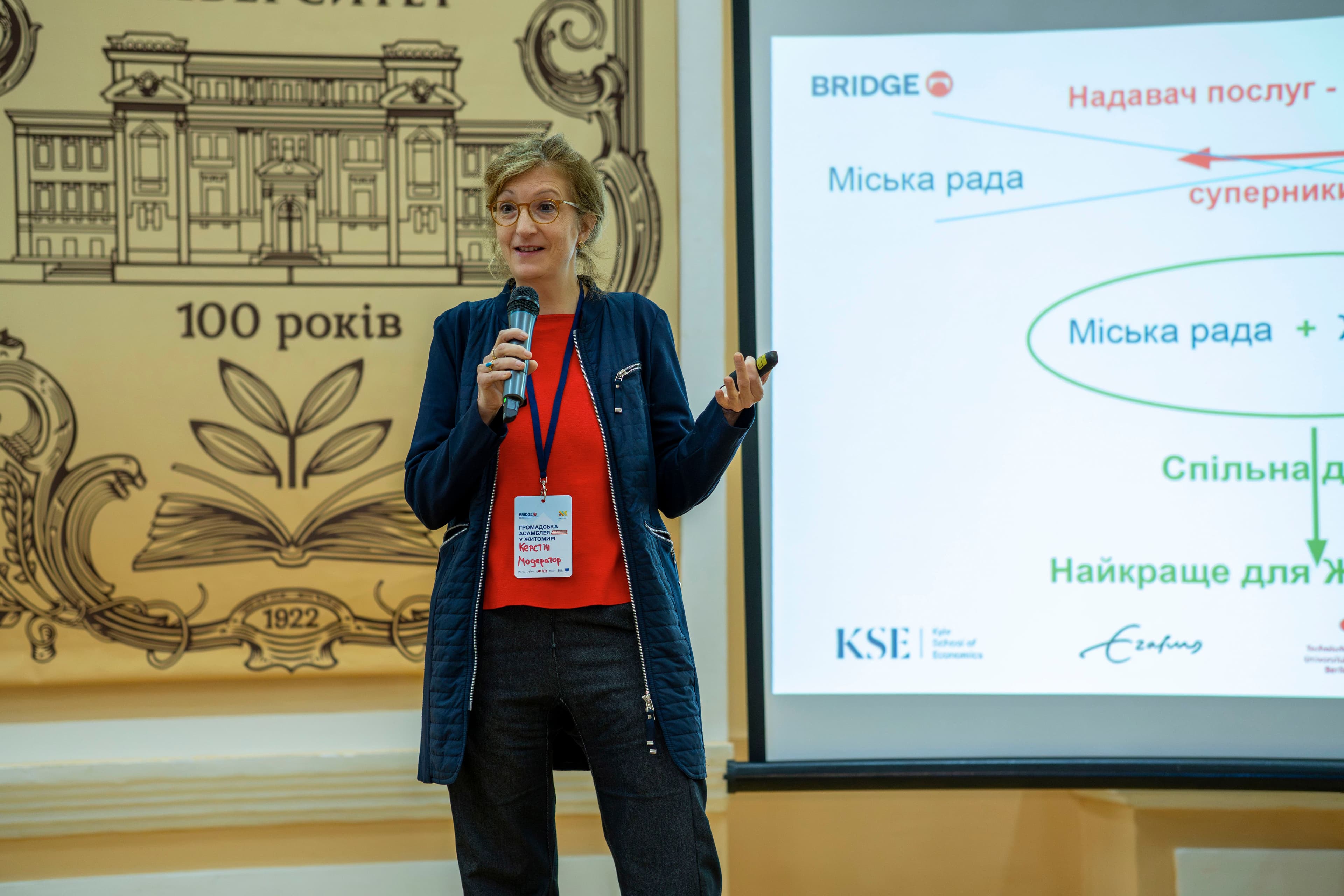
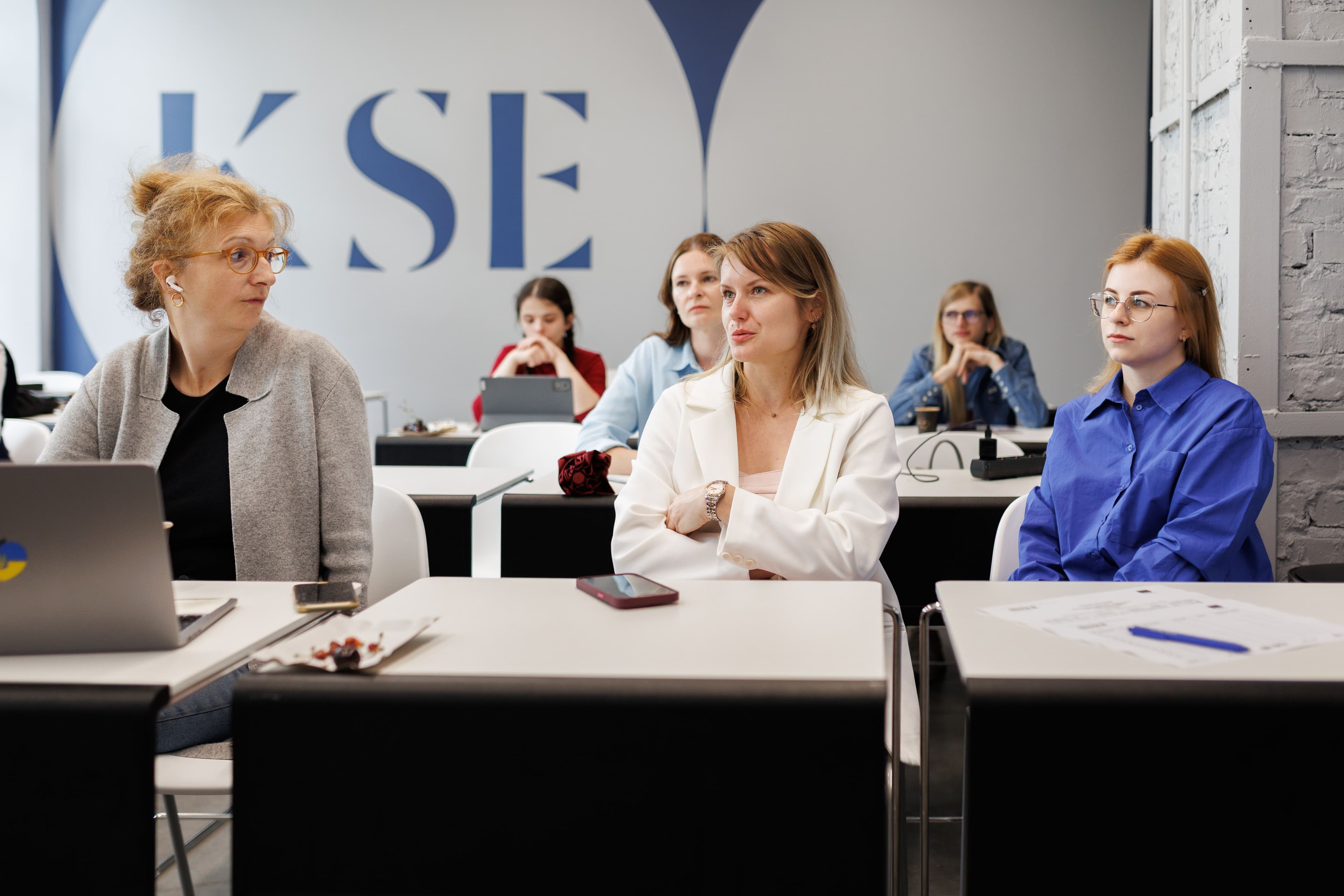
The Technical University of Berlin, where Kerstin Lücker works, is one of the project's partners. Kerstin studied musicology, philosophy and Slavic studies (Polish and Czech). She also worked for many years as a writer and literary editor (ghostwriter), writing on political and environmental issues. At the Technical University of Berlin, she heads the Public Participation Unit and is also directly involved in designing deliberative processes. She is a co-author of the books "Weltgeschichte für junge Leserinnen" (Kein & Aber, 2017) and "History of the World with the Women Put Back In" (The History Press, 2020).
Kerstin believes that, Ukrainians have gained enormous experience in defending democracy despite strong resistance both within and outside the country. It often begins with disagreeing with a decision made by the authorities, but people do not stop at saying “no”: by resisting corruption and the abuse of power, they build democratic structures that genuinely work.
In Kerstin's view, Europe has much to learn from Ukrainians, particularly from their optimism, flexibility, and courage to work towards a future that they can shape themselves, including through deliberative processes.