
Second meeting of the Deliberative Democracy Lab
Citizens’ assemblies as a tool for social cohesion and decision-making
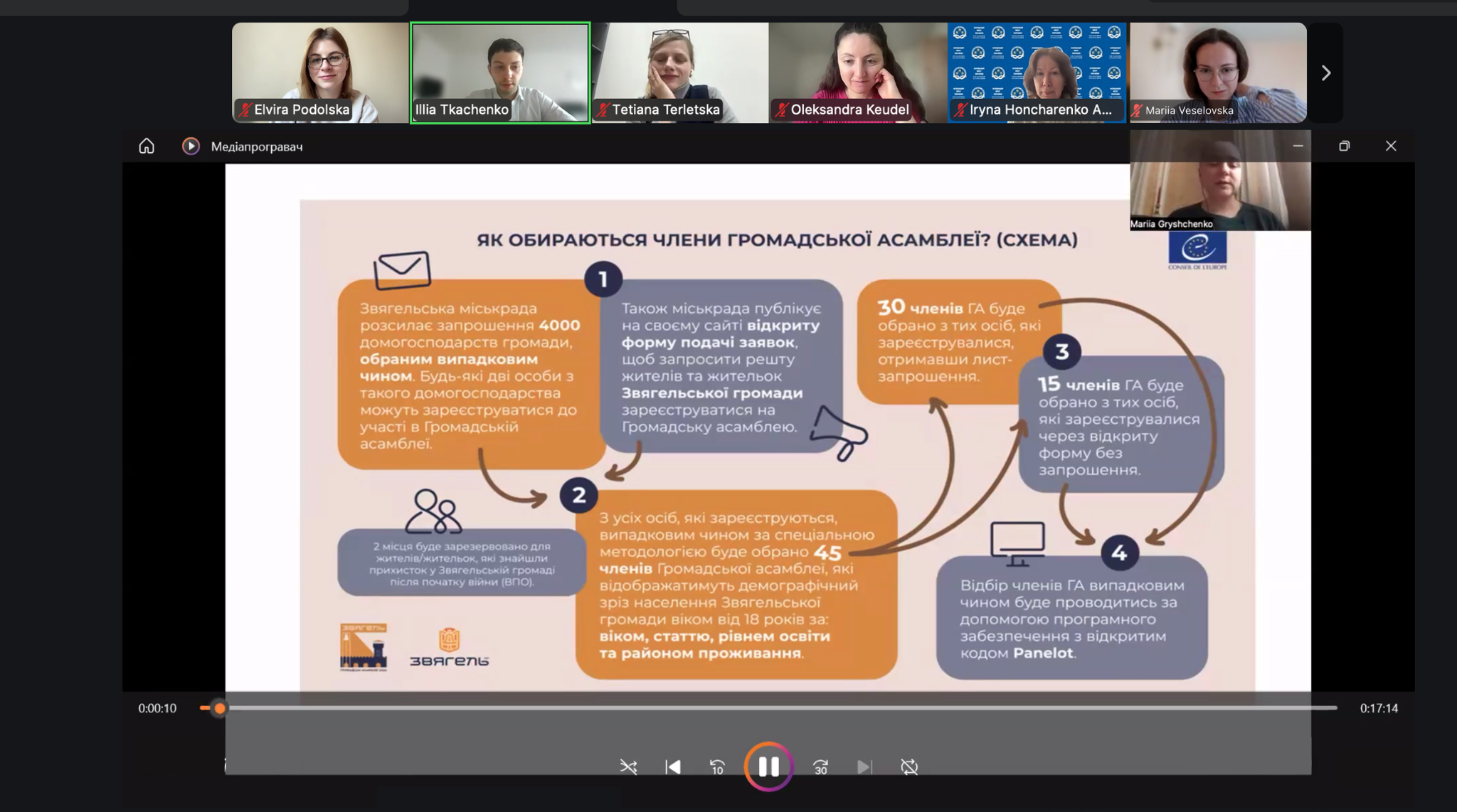
On 4–5 March, the second online meeting of the Deliberative Democracy Lab took place as part of the BRIDGE project. The two-day session focused on citizens’ assemblies and the citizens’ panel — sortition-based public participation tools that enable residents to engage in decision-making through joint informed discussions of issues, exchange of arguments, and the search for solutions that take into account different interests within a community. The session combined case presentations, Q&A with speakers, and small-group discussions focused on key organisational aspects.
During the meeting, participants explored Ukrainian cases of deliberative democracy: the citizens’ panel in Konotop and citizens’ assemblies in Zviahel, Slavutych, and Zhytomyr. Based on these examples, participants discussed the challenges that arise at different stages of implementation in the Ukrainian context.
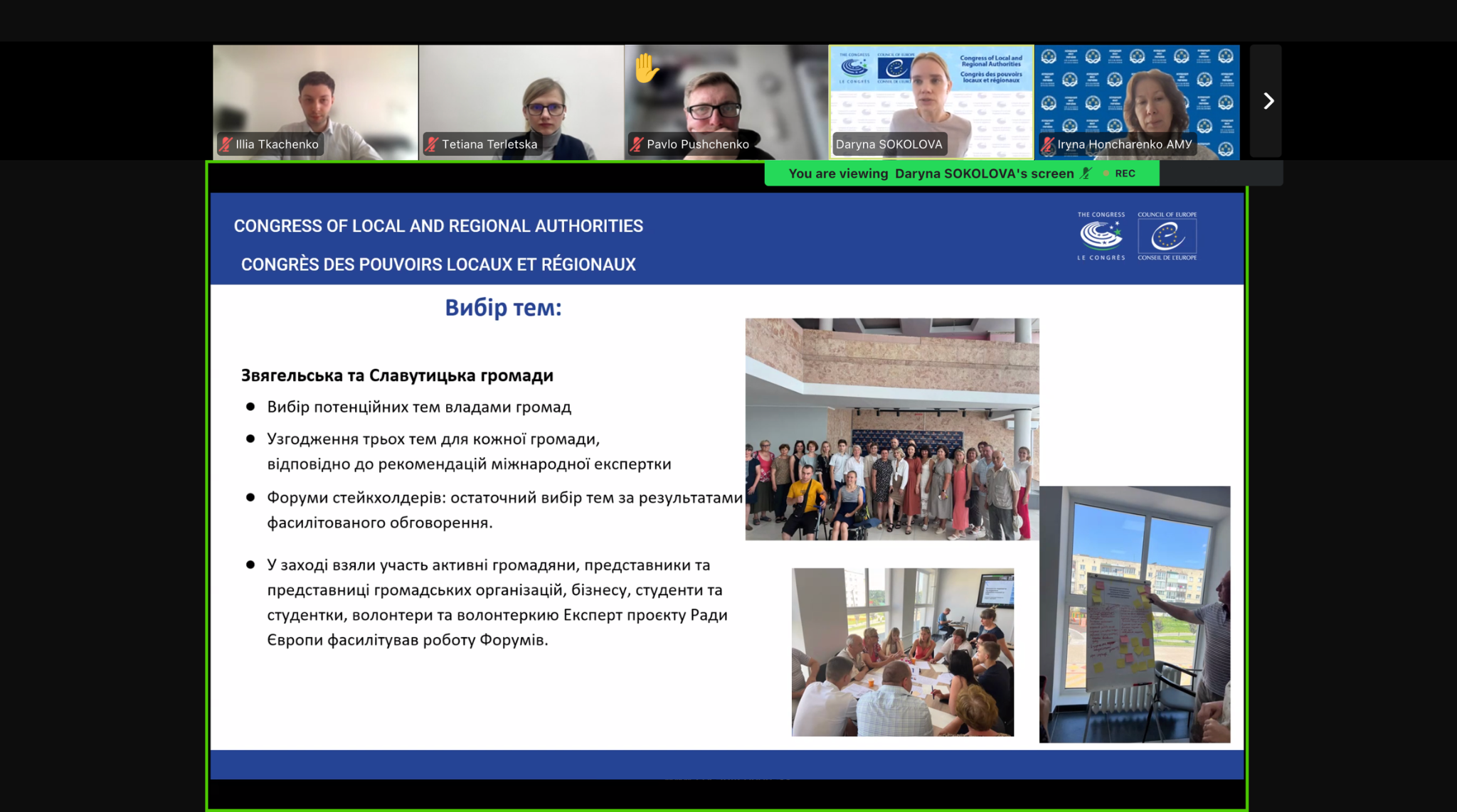
During the group discussions, Lab participants focused on the first three key aspects of organising citizens’ assemblies: representativeness in sortition-based participant selection, the choice of discussion topics, and measures to ensure trust and legitimacy in the process and results. Approaches formulated and discussed during this session will be used to form final recommendations of the Deliberative Democracy Lab.

The outcomes of the Lab will help adapt the principles of deliberative democracy to the Ukrainian context and develop practical recommendations for practitioners, communities and public authorities.
The next meeting will take place on 16–17 April in Kyiv and will be the first offline session of the Lab. Participants will finish discussion of citizen assemblies and panels with the focus on agenda setting principles, final recommendations quality, and mechanisms to ensure their implementation. The second part of the session will be dedicated to exploring deliberative democracy tools in the context of the Law of Ukraine “On People’s Power” and their potential role as instruments for its implementation. Building on this, participants will continue refining key principles of deliberative processes and consider how these tools can be effectively embedded within the broader legislative framework for public participation in Ukraine.
The Deliberative Democracy Lab is a platform for exchanging ideas and experiences with the aim to identify effective adaptations of international deliberative practices to the Ukrainian context. The Lab’s ultimate goal is to develop recommendations for the effective integration of deliberative democracy into Ukraine’s public participation system.