
Citizens' Assembly in Zhytomyr 2025
Transport infrastructure and sustainable mobility
In the autumn of 2025, Zhytomyr hosted its first Citizens’ Assembly on the topic "Transport Infrastructure and Sustainable Mobility".
The Zhytomyr Citizens’ Assembly was the third citizens’ assembly held in Ukraine and the first to take place in a regional center. The city was selected through a competitive process within the BRIDGE project among communities from Kyiv, Chernihiv, and Zhytomyr regions.
The Citizens’ Assembly was jointly organized by the BRIDGE project and the Zhytomyr City Council. Preparation for the Assembly included broad public consultations in cooperation with the City Council, a stakeholder forum at which the Assembly topic was selected, as well as focus groups with community members and relevant officials.
In addition, a citywide online discussion was conducted on the Polis platform, engaging nearly 800 residents. The results of all consultations and discussions formed the basis for shaping the Assembly’s agenda.
On October 25–26 and November 1–2, 2025, 64 residents of Zhytomyr, selected through a random selection process, took part in group deliberations and jointly developed recommendations for the city authorities on how to make mobility in the city safer, more convenient, more accessible, and more equitable for all.
With the support of experts from the Kyiv School of Economics and the Technical University of Berlin, participants discussed road safety, parking, walkability, cycling infrastructure, and public transport. As a result of the Citizens’ Assembly, 19 recommendations were developed, 14 of which were identified as priorities for implementation within the next 1–2 years.
The developed proposals will be submitted to the Zhytomyr City Council for consideration during the 2026 budget planning process. The report was handed over on 17 February 2026.
The full text of the 2025 Zhytomyr Citizens’ Assembly Report can be accessed HERE.
Approved and adopted recommendations:
SAFETY:
- Implement at least one completed cycling route in accordance with the city’s cycling concept
- Ensure the uninterrupted operation of traffic lights, including through the provision of alternative power supplies (e.g. solar panels)
- Extend the duration of green traffic light signals for pedestrians on wide roads and install safety islands
- Ensure effective quality control of road works through public involvement, and hold the contracting authority and the contractor accountable for any violations
- Improve control over the quality of lighting at pedestrian crossings
- The city should apply tactical traffic-calming measures, particularly during ongoing road works and in the vicinity of medical, social and educational facilities
PARKING:
- Develop and implement paid parking on the central streets of Zhytomyr
- Provide support to homeowners’ associations and housing cooperatives in the registration of adjacent land plots for their own needs, including parking facilities
- Install parking meters offering cashless and cash payment options, and develop a dedicated mobile application featuring a parking map with information on prices and parking availability
- Introduce the impoundment of vehicles parked in violation of traffic regulations
BICYCLES:
- Based on the cycling concept, develop a phased plan to implement a unified network of continuous, safe cycle routes for bicycle and kick scooter users
KYIVSKA STREET:
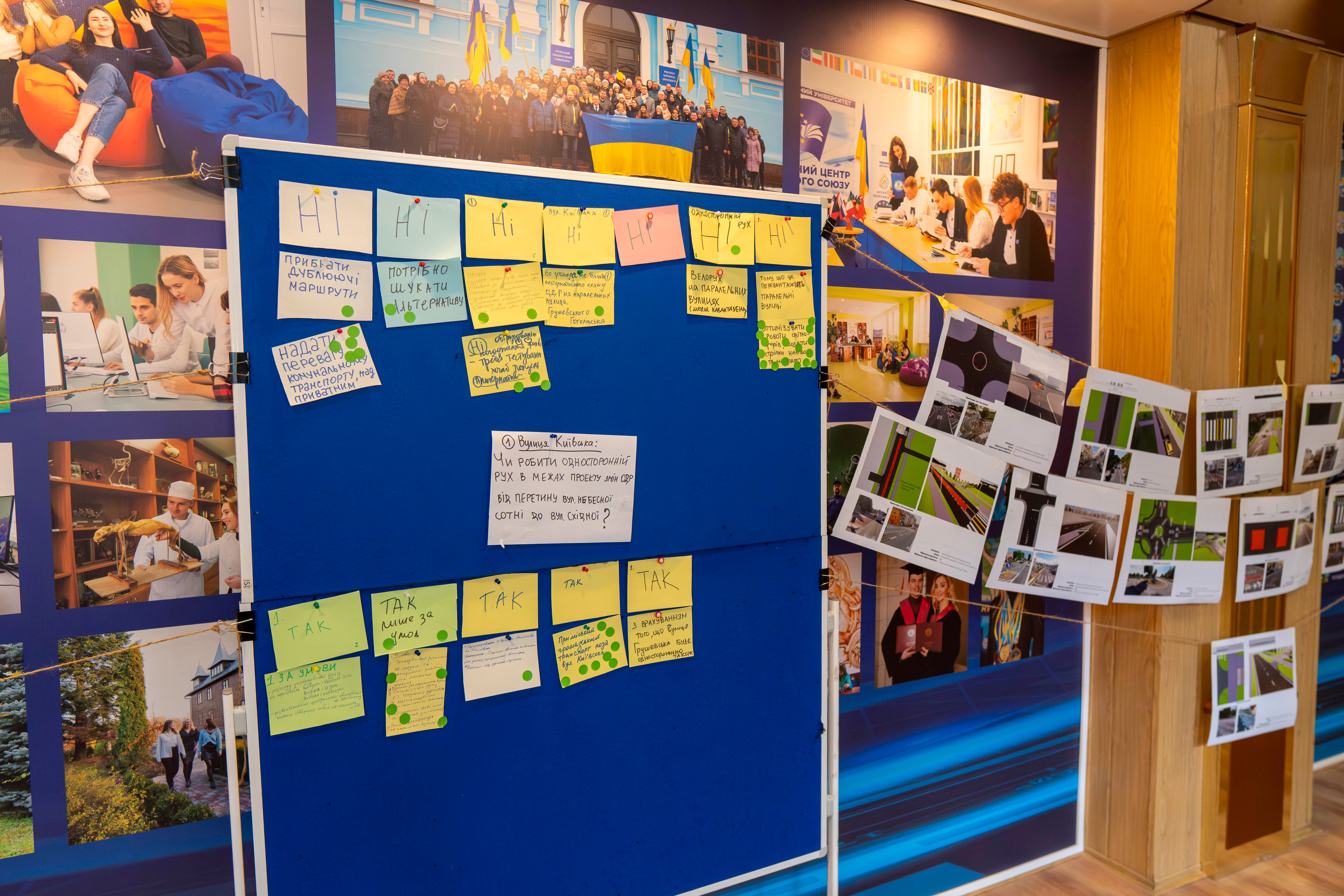
- Refrain from introducing one-way traffic within the scope of the traffic management changes project between the intersection of Nebesna Sotnia Street and Skhidna Street, and instead optimise traffic signal operation and introduce dedicated left- and right-turn signals
- Review route duplication along Kyivska Street and ensure that priority is given to public transport
PUBLIC TRANSPORT:
- Develop an integrated single-ticket system for public transport operated by municipal and private entities, taking into account preferential fare categories for community residents, and ensure that the ticket is also available to non-residents.
.jpg&w=828&q=75)
Participants of the Citizens’ Assembly were selected in two stages using a random selection process. Two-thirds of participants were invited via randomly selected addresses, while one-third were drawn from residents who voluntarily registered to participate. A stratified selection algorithm was applied to ensure representation close to proportional by age, gender, district of residence, and predominant mode of transportation.
On the first day of the Assembly, 64 residents of Zhytomyr participated; on the second and third days, 63 residents; and on the fourth day, 61 residents.
Distribution of participants by age and gender:

Format features
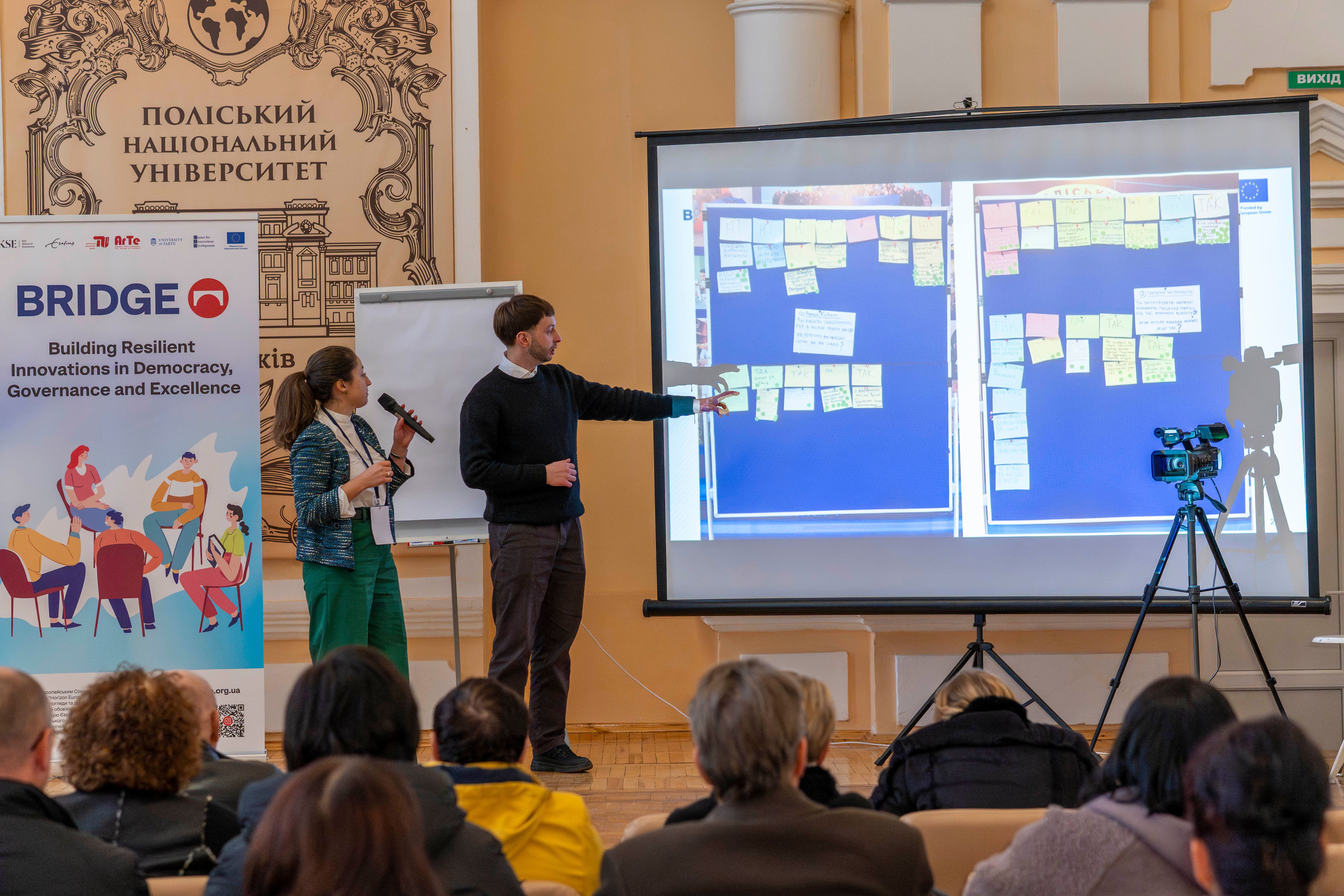
The Citizens’ Assembly combined educational sessions with small-group deliberations. Participants listened to presentations by experts and stakeholders, followed by small-group discussions. At the beginning of the Assembly, the focus was on learning and foundational discussions, while the later stages emphasized focused deliberation and the development of concrete recommendations. The results of group work were regularly presented during plenary sessions. Over the course of 4 days, the Assembly featured 16 expert presentations, one panel discussion, and 9 group deliberations.
Educational component
The educational program covered both practical and strategic aspects, including:
- the budget process in Zhytomyr
- behavioral science
- an overview of the community’s strategic documents on mobility
- presentation of the traffic management change concept for Kyivska Street
- parking policy
- pedestrianization of urban space
- challenges facing public transport
- a meeting with police representatives
- low-cost interventions to improve road safety
- the needs of cyclists.
Links to lectures and presentations:
25.10.2025:
Concept of bicycle infrastructure development in the Zhytomyr urban territorial community: relevance and implementation | Alina Kundich – watch
Low-budget interventions to improve safety | Artem Poliukh – watch
A city comfortable for living: behavioral insights in urban planning | Volodymyr Vakhitov – watch
Sustainable urban mobility plan of Zhytomyr | Dmytro Tkachuk – watch
Who owns the city? Integrated development of Zhytomyr and promotion of sustainable urban mobility in Zhytomyr | Iryna Milash – watch
Cooperation with city authorities and communicating change: the case of Lutsk | Pavlo Mazyliuk – watch
Zhytomyr’s development vector, budget, and citizen participation | Svitlana Olshanska – watch
26.10.2025:
Tactical tools in Zhytomyr + TUMI School Streets | Borys Pakholiuk – watch
Concept presentation of the Kyivska Street project in the Zhytomyr City Territorial Community | Volodymyr Shumliakivskyi – watch
Public discussion of the traffic management project on Kyivska Street | Oleksandr Shevchuk, Artem Poliukh, Pavlo Mazyliuk (discussion) – watch
How road repairs and maintenance are prioritized | Dmytro Pavlov and Mykola Yermakov – watch
01.11.2025:
What is missing in Zhytomyr’s public transport system? | Andrii Shaida – watch
Parking in the courtyards of apartment buildings | Valerii Pyndyk – watch
Parking in Zhytomyr | Oleksandr Shevchuk – watch
Urban Parking Practice | Ching-Fu Chen – watch
Transformation of urban area in Barcelona | Jordi Marfà – watch
02.11.2025:
How changes to traffic management are approved | Police representatives Ruslan Khomych and Iryna Sereda - watch
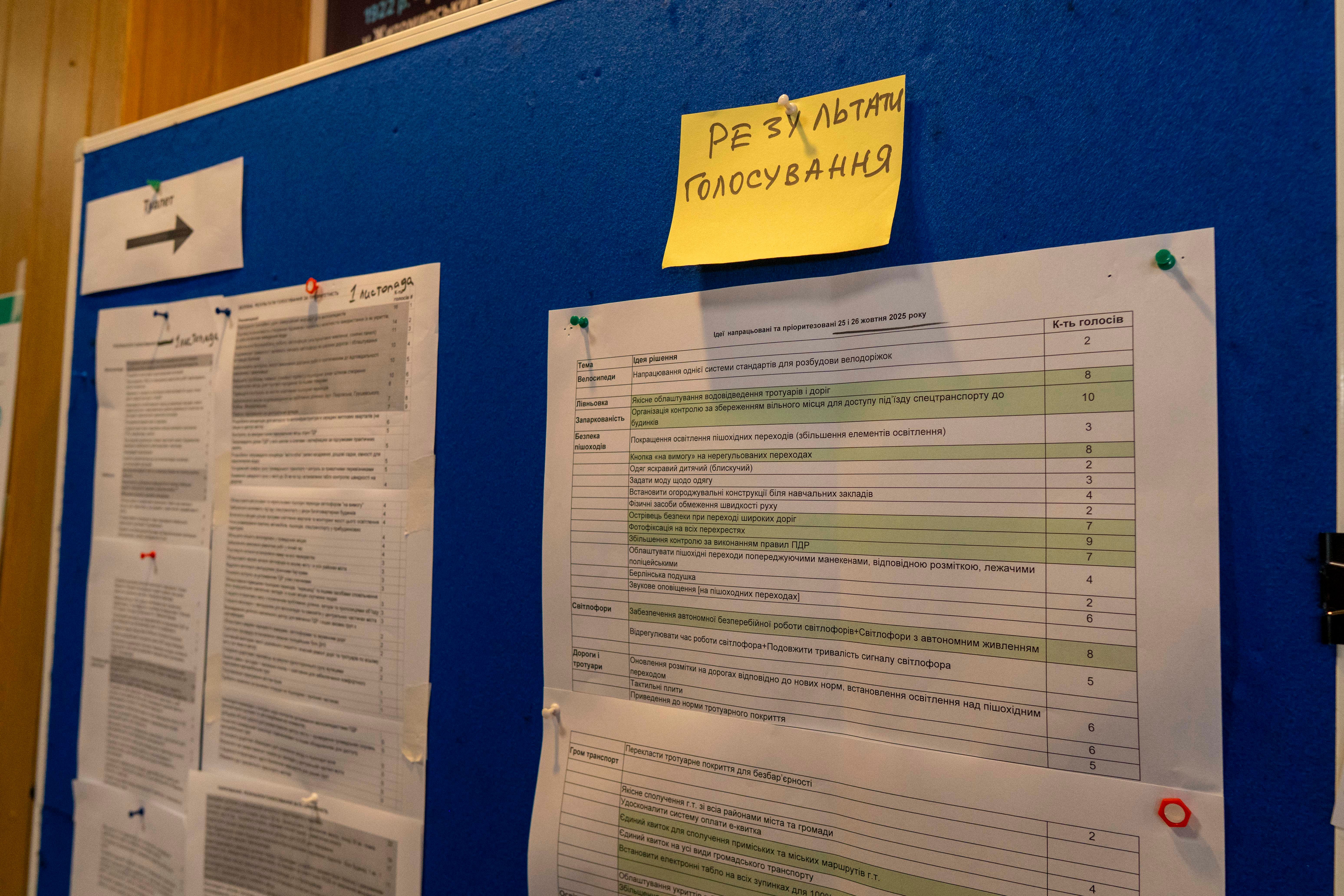
On the final day of the Citizens’ Assembly, participants focused on finalizing the recommendations. This included sorting them into those realistically achievable within 1–2 years and those requiring a longer timeframe. This was followed by alignment of wording and final voting: only recommendations classified as “realistic to implement within 1–2 years” were put to a vote. The full list of recommendations — approved, rejected, and those not submitted for voting — is provided in the Zhytomyr Citizens’ Assembly report.
.jpg&w=3840&q=75)
How was the Zhytomyr Citizens’ Assembly prepared?
